Teeth Grinding (Bruxism) in Markham: Signs, Damage & Treatment Options
You wake up and your jaw aches. There's a dull headache behind your temples before you've even had your first coffee. Your partner mentioned something in the night: a strange, rhythmic scraping sound. Sound familiar?
You might be grinding your teeth.
Bruxism, the medical term for involuntary teeth grinding or jaw clenching, affects roughly one in three adults at some point in their lives. Most cases happen during sleep, which means many Markham patients have no idea they're doing it until a dentist spots the wear at a routine appointment, or until symptoms become hard to ignore.
This guide covers everything you need to know: how to recognise the signs, what grinding does to your teeth and jaw over time, how a Markham dentist diagnoses and treats it, and how a custom night guard from Hwy7 Family Dentistry can protect your smile.
What Is Bruxism? Sleep Grinding vs. Daytime Clenching
Bruxism comes in two forms:
Sleep bruxism grinding or gnashing that happens unconsciously during sleep. This is the more damaging type because you have no conscious control, and forces are often far greater than normal biting.
Awake bruxism clenching the jaw while awake, typically during concentrated tasks like driving, working at a computer, or being stuck in a stressful meeting. Many people don't realise their teeth are touching at all.
Both types put excessive force on teeth, gums, and the jaw joint. Left untreated, either can lead to lasting structural damage.
7 Signs You May Be Grinding Your Teeth
Because sleep bruxism happens when you're unconscious, the signs are indirect. Watch for:
Morning jaw soreness or stiffness: your jaw muscles have been working hard all night.
Waking headaches: tension headaches that start at the temples or behind the ears are a hallmark sign.
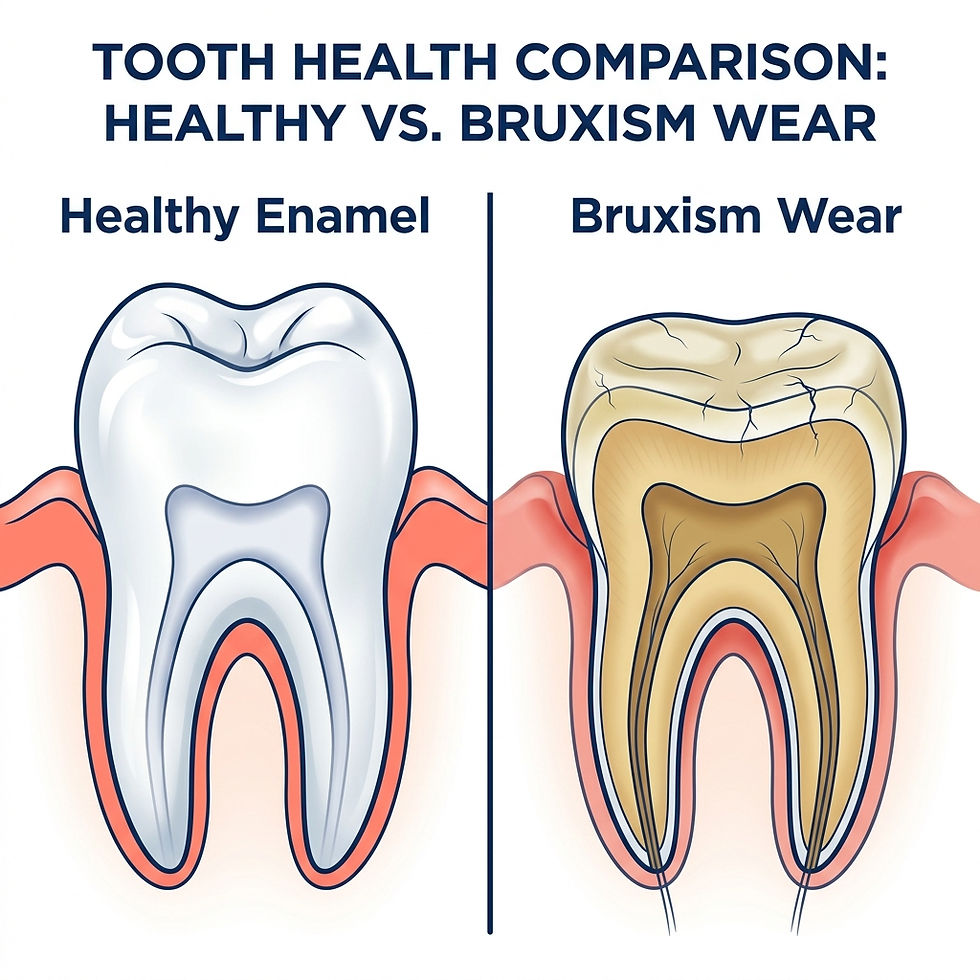
Tooth sensitivity: Worn enamel exposes the sensitive dentin layer beneath, making teeth react sharply to hot, cold, or sweet.
Flat or chipped teeth: Healthy teeth have distinct cusps. Grinding gradually flattens or fractures them.
Earaches with no ear infection: jaw joint inflammation can radiate into the ear canal.
Cheek tissue damage: some people bite the inside of their cheek without realising it; this is related to muscle activity.
A partner reports grinding sounds: the scraping noise of enamel on enamel is often heard by a sleeping partner before the grinder ever suspects a problem.
If two or more of these apply to you, mention it at your next Markham dental appointment even if it feels minor.

What Does Teeth Grinding Actually Do to Your Mouth?
Short-term damage
Early bruxism causes micro-fractures and surface wear that you might not notice visually, but your dentist will see on close inspection. As the enamel thins, you may experience increased tooth sensitivity and morning muscle soreness that fades by mid-morning.
Long-term damage
Untreated grinding over months and years causes progressively more serious harm:
Enamel erosion: Enamel is the hardest substance in the human body, but it's not renewable. Once ground away, it's gone for good.
Fractured teeth: Deep cracks can reach the pulp, requiring root canal therapy or, in severe cases, emergency dental care in Markham.
Failed restorations: dental crowns in Markham, veneers, and fillings can crack or dislodge under repeated grinding force; replacing them is costly.
Gum recession: excessive clenching pressure can contribute to gum tissue pulling away from teeth.
Bone loss: In extreme cases, long-term grinding can accelerate bone loss in the jaw.
Temporomandibular Disorder (TMD)
Bruxism is one of the leading causes of temporomandibular disorder (TMD), a condition involving dysfunction of the jaw joint and the muscles controlling movement. Symptoms of TMD include clicking or popping sounds when you open your mouth, limited jaw range of motion, and chronic facial or neck pain.
TMD significantly affects quality of life eating, speaking, and sleeping all become more difficult. Early intervention with a night guard can interrupt this progression.
What Causes Bruxism? The Stress Connection
The root causes of bruxism are not fully understood, but research consistently identifies several contributing factors:
Stress and anxiety are the most common trigger. When you're mentally stressed, your body tends to hold physical tension, and the jaw is a common tension storage site.
Sleep disorders: sleep bruxism is classified as a sleep-related movement disorder; it's associated with sleep apnea, snoring, and restless legs syndrome.
Medications: Certain antidepressants (particularly SSRIs like paroxetine and sertraline) list bruxism as a side effect.
Misaligned or missing teeth and an uneven bite can cause the jaw to seek a more comfortable resting position, sometimes through grinding.
Caffeine and alcohol both can intensify bruxism episodes, especially when consumed close to bedtime.
Genetics: Bruxism tends to run in families, suggesting a hereditary component.
Addressing the root cause, whether that's stress management, reviewing medications with your doctor, or correcting a bite issue, is an important part of long-term management.

How Bruxism Is Diagnosed at a Markham Dental Appointment
There is no single test for bruxism. Your Markham dentist diagnoses it by combining:
Visual examination looking for characteristic wear patterns on the biting surfaces of teeth, particularly on the molars and canines.
Symptom history asking about morning jaw pain, headaches, sleep quality, and stress levels.
X-rays to assess the jaw joint and rule out other causes of tooth damage.
Dental impression: If significant wear is present, a mould of your teeth creates a baseline record.
In most cases, your dentist can make a confident diagnosis at a standard check-up. No specialist referral is needed to start treatment.
Treatment Options: How Bruxism Is Managed
1. Custom Night Guard (Occlusal Splint)
A custom-fitted dental night guard is the gold-standard, first-line treatment for sleep bruxism. Here's how it works at Hwy7 Family Dentistry:
Your dentist takes precise impressions (or digital scans) of your upper and lower teeth.
The impressions are sent to a dental lab, where a hard or dual-laminate acrylic guard is fabricated to fit your bite exactly.
At your fitting appointment, the guard is adjusted for comfort and tested with bite paper to ensure even contact.
You wear it every night. Most patients adapt within two to four weeks.
A custom night guard does not stop grinding; it redirects the force, creates a barrier between your teeth, and distributes pressure evenly across the jaw so teeth and restorations are protected.
💰 Cost: Custom night guards in Ontario typically range from $300–$600, depending on the complexity of your bite and the guard material. Many extended health benefit plans cover a portion of the cost. Ask our front desk team about your coverage we can check your plan before you commit. |
2. OTC Night Guards: What to Know
Over-the-counter "boil-and-bite" guards from pharmacies cost $20–$60 but are significantly less effective: they're bulkier, tend to fit poorly, and can sometimes exacerbate jaw muscle tension. They can be a short-term stopgap while waiting for a custom guard but are not a long-term solution for moderate to severe bruxism.
3. Stress Reduction and Lifestyle Changes
Since anxiety is the most common driver of bruxism, managing stress can meaningfully reduce grinding frequency:
Regular exercise (even a 20-minute daily walk reduces cortisol levels)
Relaxation techniques: meditation, deep breathing, progressive muscle relaxation
Reducing caffeine, particularly after 2 pm
Limiting alcohol, especially in the evening
A consistent pre-bed wind-down routine
For patients with clinically significant anxiety, a referral to a psychologist or therapist may complement dental treatment.
4. Bite Correction
If misaligned teeth or an uneven bite contribute to grinding, orthodontic treatment or selective dental adjustments may reduce the mechanical trigger. Your dentist will assess whether bite correction is warranted after examining your wear patterns.
5. When Is a TMJ Specialist Needed?
Most bruxism patients are successfully managed by their general dentist. A referral to an oral medicine specialist or TMJ specialist may be recommended if:
You have persistent, severe jaw pain that does not improve with a night guard after 3 months
You have significant jaw locking or limited jaw opening
Imaging shows structural damage to the temporomandibular joint (condyle wear, disc displacement)
Your symptoms suggest obstructive sleep apnea in this case; a sleep study through your physician may be the first step
Bruxism Treatment at Hwy7 Family Dentistry, Markham
At Hwy7 Family Dentistry Markham dentist on Highway 7, we see bruxism regularly and we know how much of a difference catching it early makes. Whether you've noticed the signs yourself or your last dentist flagged early wear, our team can:
Conduct a thorough bruxism assessment at your next check-up
Take precise impressions for a custom-fitted night guard fabricated by a Canadian dental lab
Monitor tooth wear at every appointment and adjust your guard as needed
Advise on whether bite correction or specialist referral is appropriate for your situation
We serve patients across Markham, Unionville, Thornhill, Stouffville, and the greater GTA. Same-week appointments are often available.
Conclusion: Protect Your Teeth Before the Damage Is Done
Bruxism is one of those conditions that's easy to dismiss in the short term the symptoms come and go, the damage is gradual, and grinding happens while you sleep. But the cumulative cost to your teeth, jaw, and quality of life can be significant.
The good news: it's very treatable. A custom night guard from your Markham dentist is an affordable, low-effort way to protect teeth you've spent a lifetime building. And the earlier you act, the less damage there is to repair.
If you've been waking up with jaw soreness or your partner keeps telling you that you grind at night, book a check-up at Hwy7 Family Dentistry. We'll take a look, walk you through your options, and get you a solution that works.
📞 Book Your Appointment: Call Hwy7 Family Dentistry in Markham or book online at hwy7familydentistry.ca. Mention jaw pain or grinding when booking we'll make sure to include a bruxism assessment at your visit. |
FAQ (Frequently Asked Question)
How do I stop grinding my teeth?
The most effective way to stop the damage is a custom night guard, fitted by your dentist, which creates a barrier between your teeth during sleep. To address the root cause, reducing stress through exercise, meditation, and limiting caffeine and alcohol can decrease grinding frequency. If a medication side effect is involved, discuss alternatives with your doctor. A Markham dentist can assess your specific situation and recommend the right combination of treatments.
How much does a night guard cost in Ontario?
A custom dental night guard in Ontario typically costs between $300 and $600, depending on the type of guard and the complexity of your bite. This covers the dental impressions, lab fabrication, and fitting appointment. Many extended health benefit plans cover part or all of this cost under "dental appliances." Over-the-counter boil-and-bite guards cost 20–60 but offer significantly less protection and comfort.
What does bruxism feel like?
The most common signs are a sore or stiff jaw on waking, tension headaches at the temples, and increased tooth sensitivity. Many people also notice their teeth look flatter or more worn than they used to. Because sleep grinding happens unconsciously, a sleeping partner noticing a grinding sound is often how people first realise they have it. If you experience any combination of these symptoms, mention it to your Markham dentist.
Can bruxism cause jaw pain and TMJ problems?
Yes bruxism is one of the leading causes of temporomandibular disorder (TMD), a condition affecting the jaw joint and surrounding muscles. Symptoms include clicking or popping when you open your mouth, jaw stiffness, facial pain, and in severe cases, limited jaw opening. Early treatment with a night guard can reduce the strain on the jaw joint and prevent TMD from developing or worsening. If you already have jaw pain, your Markham dentist can assess whether a specialist referral is needed.
Is teeth grinding covered by dental insurance in Ontario?
It depends on your plan. Most employer-provided extended health benefit plans include coverage for dental appliances such as night guards, though coverage levels vary typically 50% to 80% up to an annual maximum. Diagnostic appointments related to bruxism are generally covered under standard dental benefits. Provincial OHIP does not cover dental night guards. Ask the Hwy7 Family Dentistry front desk to verify your coverage before your appointment we can submit a predetermination to your insurer at no cost to you.


Comments